
The Steam Deck has had a noticeable impact on my ability to play many games, this year; being able to suspend games and pick them up again (after the kids have gone to bed) has enabled me to play a lot more story-driven and checkpoint-averse games.
Here are my top five for 2022:
- Elden Ring (PC)
- Triangle Strategy (PC)
- A Plague Tale: Requiem (Xbox Game Pass)
- Return to Monkey Island (PC)
- Immortality (Xbox Game Pass)
I found it very difficult to pick just five games this year. There are two runners up I’d like to mention; I had a lot of fun with The Legend of Heroes: Trails from Zero and AI: The Somnium Files: The Nirvana Initiative, but decided they were ultimately too similar to their predecessors to be year-defining.
Elden Ring

It almost feels a little silly talking about Elden Ring here, because it seems to be widely accepted that it is the Game of the Year. But here goes…
According to Steam, 20% of all my time spent playing games this year was spent in the Lands Between, slowly making my way across a staggeringly large open world and piecing together the world’s lore. It is nothing short of a masterpiece, weaving together all the best parts of every Soulsborne game that came before it with a huge map and a jumping horse.
Triangle Strategy

When Triangle Strategy was initially released as a Nintendo Switch exclusive, I was disappointed because I felt like it would be a perfect game to try on my Steam Deck. I was uncharacteristically patient, and 6 months later my prayers were answered.
I’ve seen a lot of reviews unfavorably comparing Triangle Strategy to Final Fantasy Tactics, saying that the games aren’t similar. I don’t understand this criticism; the core gameplay loop is almost exactly the same, and I’d recommend each to fans of the other. The game alternates between text-heavy cutscenes (at times feeling like a visual novel) and lengthy strategic battles (some lasting about an hour), telling a branching story that requires four playthroughs to fully experience. I’m itching to play it again, and in any other year it would have easily nabbed the top spot.
A Plague Tale: Requiem

The original A Plague Tale: Innocence was the first game that I played on Xbox Game Pass, and my overall impression was a resounding “Meh”. The story was interesting, but the focus on hardcore stealth gameplay made for a frustrating experience.
I took a chance on A Plague Tale: Requiem (again on Xbox Game Pass) and was pleasantly surprised to find things much improved. Although stealth is still a big part of the game, most sections can be cleared with a player’s choice of: stealth (sneaking past the majority of enemies); combat (killing the majority of enemies with a sling or crossbow); and alchemy (using the environment to kill enemies). Which skills you unlock depends on your playstyle, which is a neat trick that makes it feel like the game is adapting to the way you want to play it.
Requiem changed my opinion of the series quite dramatically, and I’m looking forward to seeing what’s next.
Return to Monkey Island
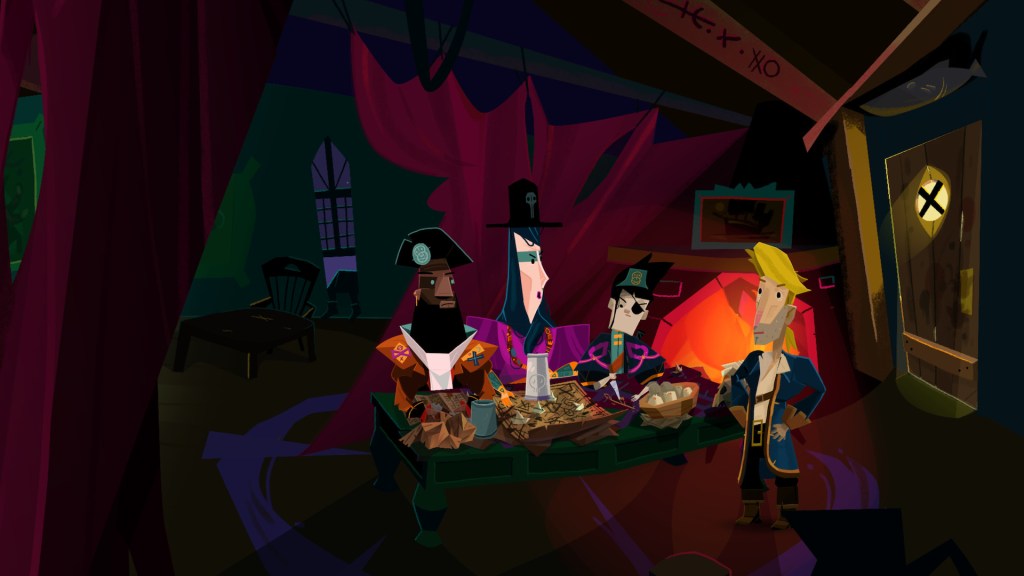
The Secret of Monkey Island was the first “real” game I ever played (on an Amiga in the early 90s), and so I was very very excited by the surprise announcement of Return to Monkey Island.
In short: the game lived up to my expectations. Perhaps nostalgia is clouding my vision, but I cannot really fault the puzzles, jokes, or characters at all. The developers also clearly invested a lot of time and effort in making the game playable with a gamepad (or Steam Deck) which I appreciated, and the control scheme sets a new standard for adventure games. Guybrush is controlled with the analog stick, and the face buttons are used for context-aware interactions — this sounds obvious, but it’s head and shoulders above pushing a mouse pointer around or pretending the character is a tank.
Immortality
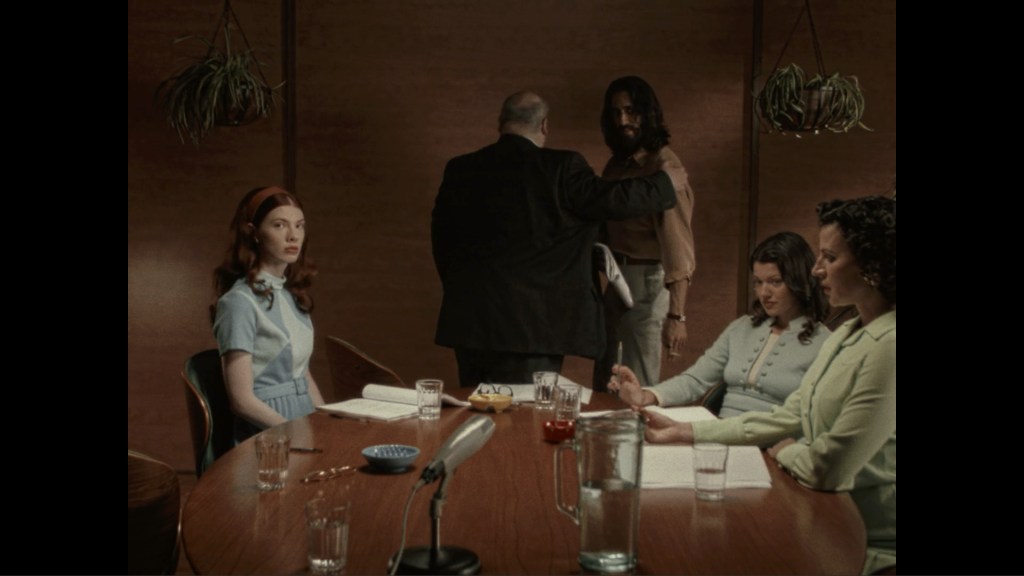
My wife and I played through Her Story and Telling Lies together on PC, and enjoyed both immensely. I was a little worried when I heard that Immortality‘s interface was no longer text-based, because taking note of important things that you hear is a key part of both of Sam Barlow’s previous games. As I feared, the “clicking on things you see” mechanic of Immortality isn’t quite as well executed… but it doesn’t get in the way of the experience unless you’re aiming for 100% completion.
There are three entire films inside of Immortality, each interesting in its own right. But there’s also a meta-narrative (what happened to Marissa, the star of those films?) and a truly bizarre Lynchian meta-meta-narrative that I won’t say any more about. Immortality has a few warts, but it’s unlike anything else I’ve ever played.
 fully::qualified::gamer